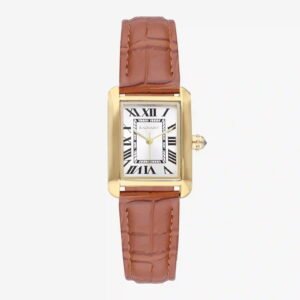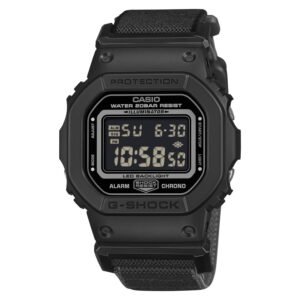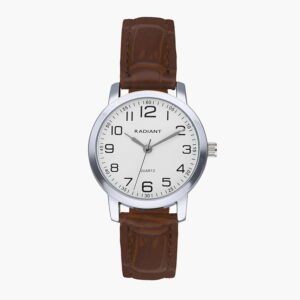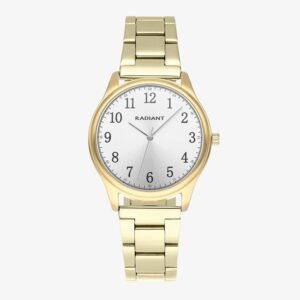

The Swiss-versus-Japanese question is older than most current watch brands. The honest answer is that at equivalent prices the two traditions compete directly, and the differences that remain are about approach rather than quality.
Swiss watchmaking: the finishing tradition
Switzerland built its reputation on decoration and heritage. Bridges are bevelled, screws are polished, and movements are designed to be looked at as well as used. The “Swiss Made” designation requires a watch to be cased and its movement finished largely within the country.
The result is a strong tradition of hand finishing and a servicing infrastructure that is genuinely worldwide.
Japanese watchmaking: the engineering tradition
Japan approached watches as precision instruments first. Seiko, Citizen and Orient all manufacture their own movements in volume, which lets them put technical capability into watches at prices where Swiss brands cannot follow. Spring Drive, Eco-Drive and high-accuracy quartz all came from this approach.
Where the differences are real
| Swiss | Japanese | |
|---|---|---|
| Finishing emphasis | Decoration, heritage codes | Function, technical solutions |
| Movement supply | Often shared via ETA/Sellita | Usually in-house |
| Servicing network | Very broad | Broad, varies by brand |
| Value at entry level | Heritage premium | Specification advantage |
Where the difference is not real
Accuracy is a poor dividing line. A well-regulated automatic from any of these manufacturers performs comparably, and quartz beats them all on precision regardless of origin. Longevity is also not a meaningful difference: both traditions produce watches that run for decades with servicing.
So which should you buy?
- Choose Swiss if heritage, hand finishing and a deep servicing network matter to you.
- Choose Japanese if you want the most capability per pound spent, or a genuinely in-house movement.
- Choose the watch, not the flag. The best purchase is the one you want to wear every day.
Our shop carries both traditions across every price bracket, so you can compare directly rather than theoretically.
Frequently asked questions
Is Swiss better than Japanese?
Not in any measurable way at equal price. Swiss watches emphasise finishing and heritage; Japanese watches emphasise engineering and specification. Both produce excellent watches.
Do Japanese watches hold their value?
Comparable to Swiss watches in the same segment. Neither is an investment at entry level, and both retain value reasonably well when well maintained.
Which lasts longer?
With servicing, both last decades. Longevity comes from maintenance rather than country of origin.